
God, doubt, and that awkward middle we live in
The space between belief and disbelief is a neighborhood I know well. It’s the stretch of road where your chest tightens at 2 a.m., and you half-whisper a prayer into the ceiling, then wait for something—anything—to move. Sometimes nothing does. There’s coffee the next morning, and the world keeps going, and you wonder if you’re the only person faking confidence in the sacred. I think most of us live here, in the awkward middle, where God feels like a presence and an absence in the same breath. It isn’t tidy, but it’s real, and that counts for something.
When prayer feels like echo, not answer, hold on
I’ve prayed in bathrooms and back seats and waiting rooms that smelled like antiseptic and old magazines. The echo of it—those words flung out, not sure where they’ll land—can be embarrassing, like singing to an empty auditorium. I used to think unanswered prayers were evidence of a cosmic voicemail box no one checks. Now I suspect some of what I call silence is just the very long sentence God is speaking, and I keep interrupting at the comma.
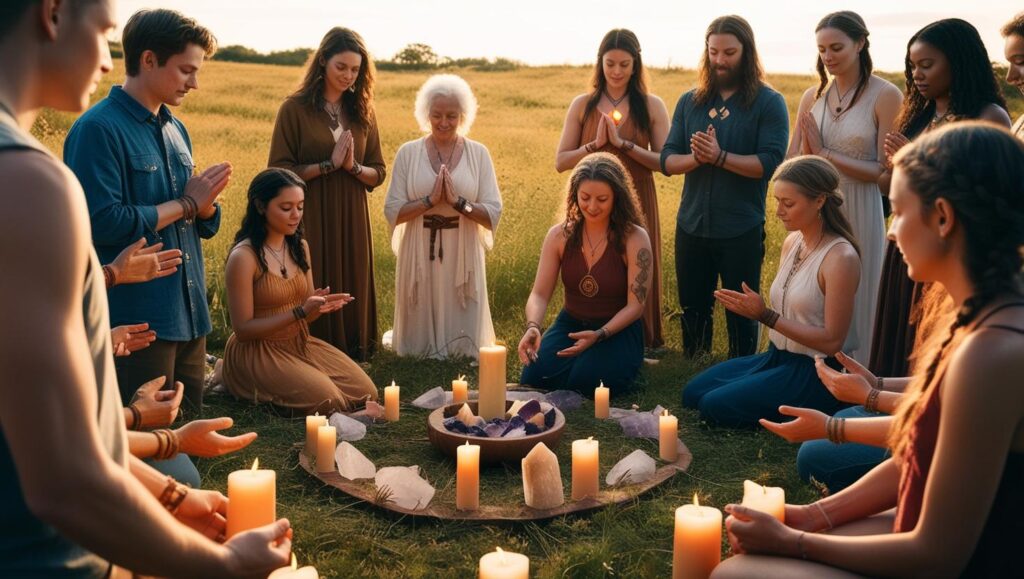
There are days when the only thing holy is the stubbornness to keep showing up. You light the candle. You breathe the same line of Psalm or half-baked plea because it’s the only one you remember. In the kitchen, the kettle clicks off and the world is still hopelessly ordinary. Maybe that’s the point—prayer stealing back a moment from the engines of panic, letting you stand there, barefoot on tile, and know you are held even if nothing changes yet.
I don’t mean to romanticize it. There are diagnoses that don’t go away, and bills, and people who stay gone. The echo is loud then, and it hurts. But there’s a strange mercy in refusing to measure prayer by its immediate results, like judging a seed by the first afternoon. Some answers don’t arrive as sentences; they show up as a person who texts at the right time, or a small peace that doesn’t fit the facts but settles in anyway.
Faith as conversation: learning to speak in uncertainty
Some people inherit fluent faith, like a language their grandparents spoke at the table. I didn’t. I learned the grammar late, mixed tenses, got nervous and over-explained. The conversation with God, for me, is messy—half confessional, half protest, with a lot of silence that isn’t empty so much as it is listening. Doubt isn’t an interruption to that conversation; it’s often the most honest part.
I think about the disciples asking clumsy questions, and Jesus answering sideways with a story about seeds or sheep. That’s not a debate; that’s an invitation to keep talking. It gives me permission to bring all the wrong words. On walks, I practice under my breath—thank you, I’m scared, I’m angry, I’m here—and the sky doesn’t split, but the streetlight hums like a low note, and the neighbor’s dog patrols faithfully, and something in me unclenches enough to hear my own voice telling the truth.
If faith is a conversation, community is the room where it happens. I’ve sat in pews, in living rooms, at chipped tables where prayer sounded like laughter one minute and grief the next. People pass the bread, and with it the honesty of their week: the missed appointments, the small victories, the ache. It becomes clearer that certainty is not the price of admission. Presence is. We show up, thread our doubts through the liturgy, and discover that the awkward middle is exactly where the story keeps unfolding.
Belief was never meant to be a glass display—fragile, polished, sealed. It’s more like a garden the weather keeps trying, and still it grows. There are echoes and there are answers and sometimes it’s impossible to tell which is which until much later. Keep the conversation going. Hold on to what little light you have and share it. In the middle, in the not-yet, we are already known.